
Albuquerque, New Mexico
Mold removal for Albuquerque homes, from the leak to the last wall
A musty smell when the swamp cooler kicks on, a brown ring on the ceiling after a monsoon storm, black spots creeping out from behind the tub? Tell us what you are seeing and an independent local mold remediation company can come out, find the water and quote the removal.
- Inspection through clearance
- Houses, condos and rentals
- Free to ask, no obligation
Request a mold inspection
Free to ask. An independent local mold company can call you back.
Mold help by problem
Start with the question you actually have
Every problem below has its own page, written for Albuquerque houses: what the work involves, what to check yourself and what to ask a company before anyone opens a wall.
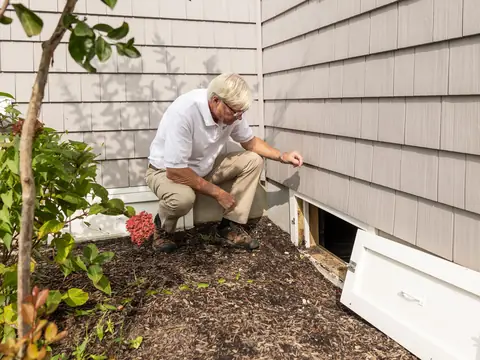
Mold inspection
Find the water first: cooler ducts, canales, slab edges and stucco cracks, house type by house type.
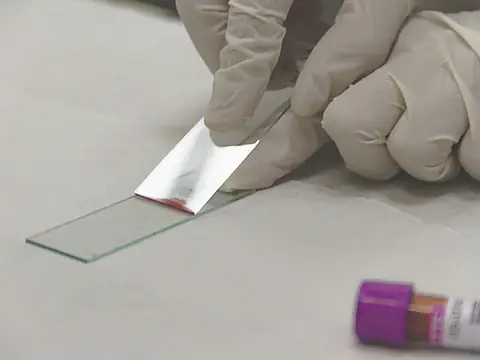
Mold testing
When an air or surface sample is worth paying for, and when the CDC says skip it and remove the mold.
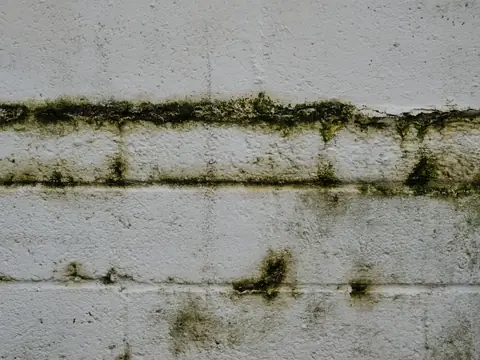
Swamp cooler mold
Pads, the reservoir and the ducts: why evaporative coolers grow mold and how to start and shut one down.
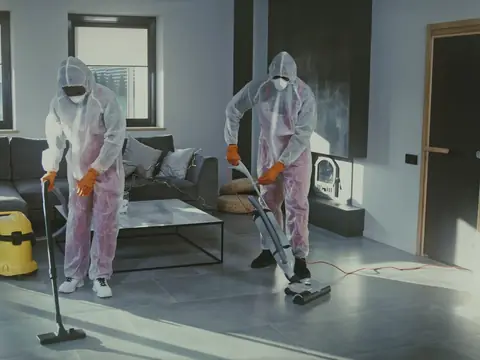
Mold remediation cost
What moves the price of a job: area size, access, containment, what comes out and the clearance check.
Water damage and mold
A monsoon leak or a burst pipe: the 24 to 48 hours you have to dry things before mold starts.


How removal works
Seven steps from the first look to a closed wall
This is what a mold job done to EPA remediation guidance usually involves. The independent company you are connected with explains its own plan before any work starts.
- 01
Inspection
Track the moisture source with a meter and a careful look, and map how far the growth goes.
- 02
Testing, if it helps
Air or surface samples only when the source is out of sight, a buyer asks or a dispute needs records.
- 03
Containment
Plastic sheeting and negative air pressure keep spores inside the work area and out of the rest of the house.
- 04
HEPA air scrubbing
Filtered air machines run while moldy materials are cut out and bagged.
- 05
Removal
Porous materials such as drywall and insulation come out; framing is cleaned and the area HEPA vacuumed.
- 06
Drying
Dehumidifiers and fans bring wood and wallboard back to normal moisture before anything is closed up.
- 07
Clearance check
A final look, and a test when one is agreed, before walls are closed and rebuilt.
Albuquerque homes
Why a desert house still grows mold
Albuquerque gets about 8.84 inches of rain a year and its climate is classed as arid. Outside air rarely stays damp for long, so mold indoors nearly always points to water the house is holding on to.

Swamp coolers
Evaporative coolers cool by adding water to the air. Wet pads, a standing reservoir or a duct that never dries out is a common start.
Monsoon storms
Most of the year’s rain arrives in the late summer monsoon, July and August the wettest months, and it finds every weak spot on a flat roof.
Flat roofs and canales
Pueblo-style roofs drain through parapets and canales. A clogged scupper or a split membrane can feed a wall for weeks before a stain shows.
Stucco that holds water
Water that gets behind stucco at a crack, a window or the base of a wall dries slowly and grows mold out of sight.
Plumbing and slab leaks
A slow leak under a sink, behind a shower or at a water heater is the most ordinary source in any month.
Cold nights
Winter lows often drop below freezing at this elevation, which means condensation on cold walls and the odd burst pipe.
Before you call
When a homeowner can clean it, and when it is a job for a company
Not every spot of mold needs a remediation company. The EPA’s brief guide to mold and moisture says that if the moldy area is less than about 10 square feet, roughly a patch 3 feet by 3 feet, in most cases you can handle the job yourself. That covers a lot of what people find in Albuquerque bathrooms: dark speckling in grout, a bloom on the ceiling over a shower that runs hot and long, a corner behind the toilet.
Small jobs still need the water fixed first. Clean a stain without stopping the drip from the shower valve or the condensation on that north wall and it is back within weeks. Wear gloves and eye protection, keep the room ventilated, bag what you throw out, and if you have health concerns the EPA’s advice is to talk to a health professional before you start.
These are the signs that a small job is not small:
- The growth covers more than about 10 square feet, or you keep finding more as you look.
- It is inside a wall, under flooring, in the attic or in the swamp cooler ducts.
- The water came from sewage, a backed-up drain or floodwater off the street. The EPA says to bring in a professional experienced with contaminated water.
- The musty smell is strong but you cannot see where it comes from.
- Someone in the house has asthma, a mold allergy or a weakened immune system.
Any one of those is a good reason to have an independent remediation company look before you start pulling things apart. Opening a wet wall without containment can move spores into rooms that were fine. If the forced-air system or the cooler ducts may be contaminated, the EPA says not to run them until they are checked, because they can carry mold through the whole house.

What the work involves
What a proper mold removal job looks like inside the house
Mold removal is mostly about control: keeping what is in the wall from ending up in the bedrooms. EPA’s guide for schools and commercial buildings, which remediation companies use as a reference for homes too, scales the work to the size of the problem. Limited containment is generally recommended for about 10 to 100 square feet of mold, and full containment for more than 100 square feet or wherever the rest of the building would otherwise be contaminated.
- The work area is sealed with plastic sheeting, with a zipper door for the workers.
- A HEPA air scrubber pulls air out of the area so it sits at negative pressure; air leaks in, not out.
- Workers wear protective gear, which for limited work includes a half or full face respirator with HEPA cartridges.
- Moldy drywall, insulation, carpet pad and other porous materials are cut out, bagged and taken away.
- Framing and other hard surfaces are cleaned and HEPA vacuumed.
- Dehumidifiers and air movers dry the structure back to normal moisture.
- A final check, often with a clearance test, comes before insulation and drywall go back.
None of that matters if the source is still wet. A good company starts by naming it: the canale that dumps against the wall, the cooler that overflows, the shower pan that leaks into the slab. Ask who fixes it. Sometimes the remediation company does, sometimes it is a roofer, a plumber or a stucco contractor, and the order of work matters. The mold remediation cost page sets out how each of these steps moves the price.

Testing and inspection
Do you need a mold test before removal?
Usually not. The CDC does not recommend routine mold testing, and there are no set standards for an acceptable amount of mold in a home. If you can see it and you know where the water comes from, the useful money is spent on removal and the repair, not on a lab report that tells you mold is present.
Testing earns its place in a few cases: a strong smell with nothing visible, a house you are buying, a disagreement with a landlord or tenant, or a clearance check after removal to show the job is finished. The mold testing in Albuquerque page has a situation by situation table. An inspection is different from a test: it is a search for water and damage, room by room, and the mold inspection in Albuquerque page lists what that search should cover in a flat-roof adobe, a pitched-roof ranch and a manufactured home.

Questions
What Albuquerque homeowners ask about mold
How can there be mold in Albuquerque if the air is so dry?
Outdoor air is dry for most of the year, but mold only needs a damp surface. Swamp coolers add water to the air by design, monsoon storms test flat roofs, and leaks under sinks or behind showers keep materials wet. Find the water and you find the mold.
Is a small patch something I can clean myself?
Often, yes. The EPA says an area under about 10 square feet can usually be handled by the homeowner, once the water source is fixed. Bigger areas, growth inside walls or ducts, sewage water, or health concerns in the house are reasons to bring in a company.
Do I need a mold test?
Not usually. The CDC does not recommend routine testing and there is no set standard for an acceptable level of mold indoors. A test helps when the source is out of sight, for a sale or a lease dispute, or as a clearance check after removal.
Does a swamp cooler cause mold?
It can. An evaporative cooler raises indoor humidity as it cools, and pads, the reservoir or ducts that stay wet can grow mold. Regular pad changes, draining the pan at shutdown and keeping indoor humidity under 60 percent all help.
Can mold make people sick?
The CDC says that for some people mold can cause a stuffy nose, sore throat, coughing or wheezing, burning eyes or a skin rash, and people with asthma or a mold allergy may have stronger reactions. Talk to a doctor about any health question.
Is black mold worse than other colors?
Color does not tell you the type. The CDC notes mold can look like spots of many colors. Whatever the color, the answer is the same: fix the water and remove the growth.
Does New Mexico license mold remediation companies?
New Mexico has no mold-specific license that this site could find. Construction work in the state needs a contractor license from the Construction Industries Division of the Regulation and Licensing Department, so ask any company what license and insurance it carries.
How much does mold removal cost in Albuquerque?
It depends on the size of the area, how hard it is to reach, what has to be removed and rebuilt, and whether a clearance test is included. The company quotes after an inspection. See the mold remediation cost page for what drives the number.
Is this site a mold removal company?
No. Albuquerque Mold Removal is a free referral service. It passes your request to an independent local mold remediation company, which contacts you, inspects and quotes any work directly. You never have to hire anyone.
Which parts of the metro does this cover?
Requests are passed on from across Albuquerque, from the Northeast Heights and Sandia Heights to the North and South Valley and the Westside, plus Rio Rancho, Corrales, Los Ranchos, Bernalillo and Los Lunas. See the areas page.

Seeing mold or smelling it? Ask for a look before it spreads.
Free to ask and no obligation to hire. Send a few details and an independent local mold remediation company can call you back, find the water and quote the removal.